

Interior Design Materials Guide: What to Use Where, and How to Avoid Seelan and Deemak
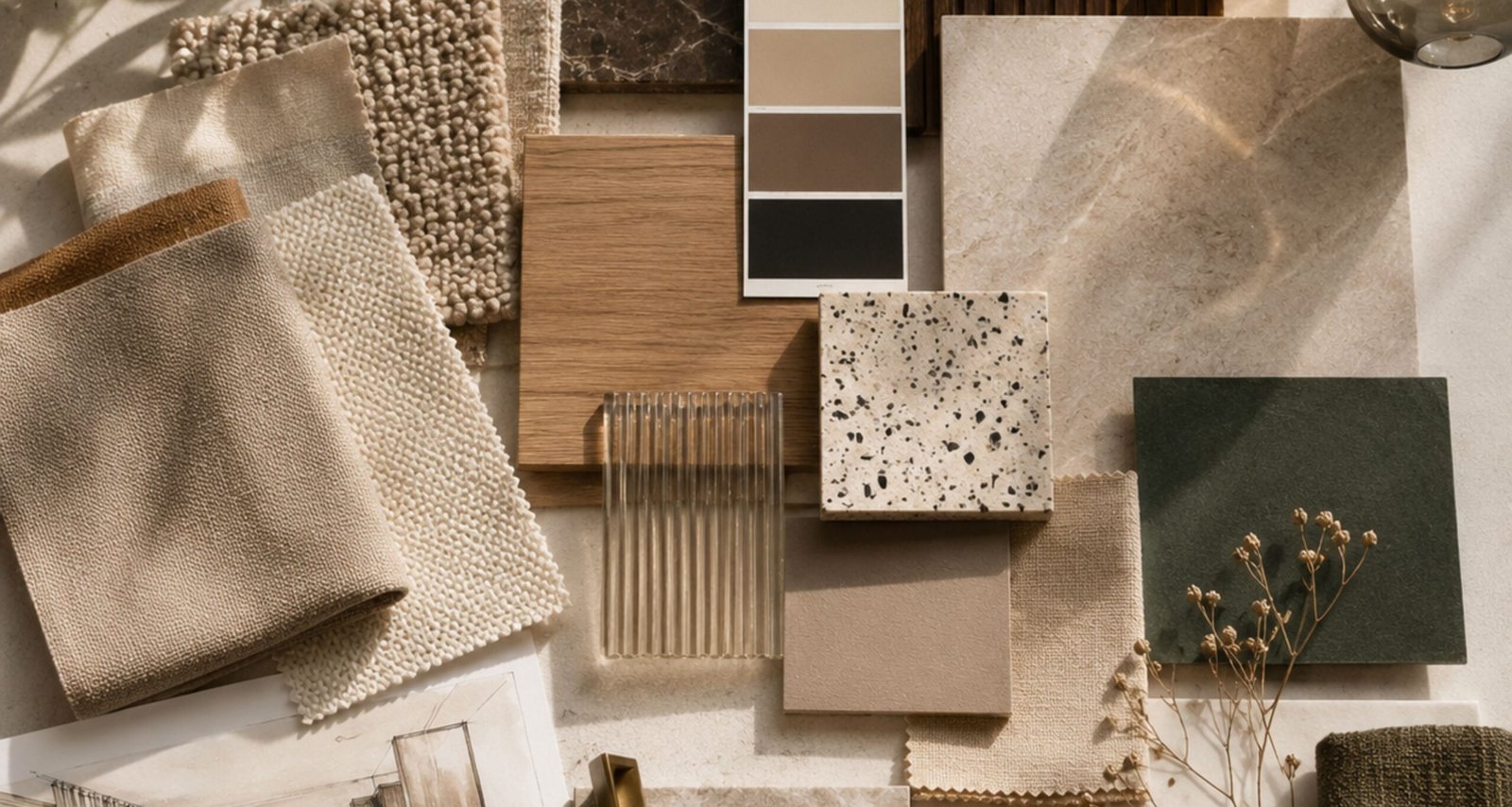
Introduction: Material Confusion Is the #1 Reason Interior Projects Go Over Budget
Looking for a genuine interior design materials guide before you start building or renovating? Here’s the honest truth: the excitement usually fades fast once real work begins. That’s because the real work isn’t picking a colour scheme — it’s figuring out which material to use where, and why.
Should the wardrobe be plywood or MDF? Will that “waterproof” ply actually survive a Jaipur monsoon? Why did the neighbour’s furniture develop termites in two years while another house is fine after ten?
This guide answers those questions directly, room by room and material by material — the kind of practical information you’d want before signing off on a single rupee of your interior budget.
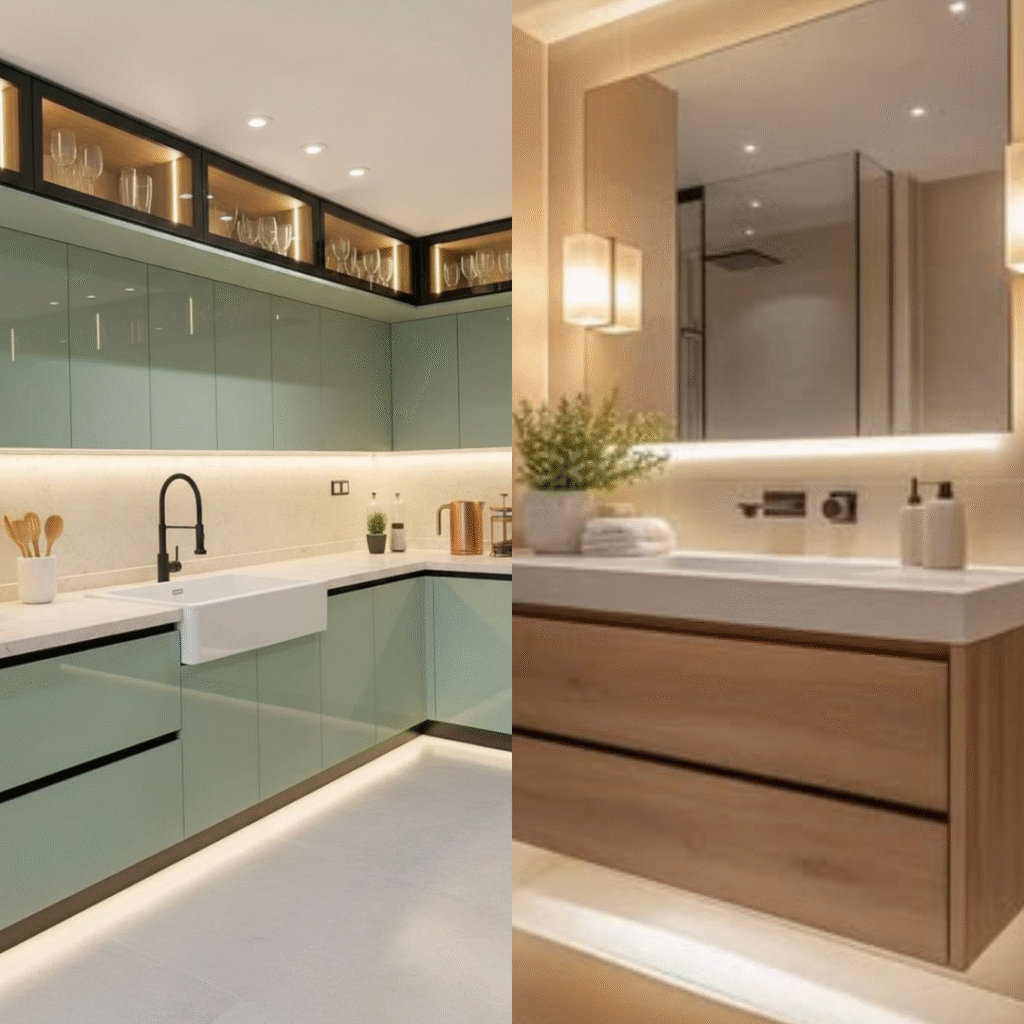
Which Material Goes Where: A Room-by-Room Starting Point
This is the starting point of any real interior design materials guide: not every room needs the same grade of material.
Not every room needs the same grade of material. Spending premium-grade money on a dry, low-use area is often wasted budget that could go toward the rooms that actually need it.
Kitchen and bathroom (high moisture zones). These rooms need water-resistant plywood at minimum, ideally boiling-water-resistant or better. This is non-negotiable — moisture exposure here is constant, not occasional.
Bedrooms and living rooms (dry, low-moisture zones). Standard moisture-resistant plywood is usually sufficient for wardrobes, TV units, and shelving in these spaces. Spending extra for marine-grade material here is rarely necessary unless the home has specific issues like rising dampness.
Exterior-facing walls and ground-floor rooms. These need extra attention regardless of which room they’re in, because dampness from outside walls or the ground can travel inward. We’ll cover this in the next section.
Balconies, utility areas, and store rooms. These see the most temperature and humidity swings in the house. Materials here should be chosen for durability over finish, since they’re rarely climate-controlled.
Understanding Plywood Grades: MR, BWR, and BWP
This is the single most confusing part of any interior design materials guide for most homeowners, so it’s worth explaining clearly.
MR (Moisture Resistant) — IS 303. This is the entry-level grade. It handles mild humidity but isn’t meant for direct water contact. It’s fine for dry-area furniture like bedroom wardrobes and study units.
BWR (Boiling Water Resistant) — IS 303. This is a step up, and the practical default for most Indian homes. It handles humidity and occasional moisture well, including kitchen cabinets, and is usually chemically treated against termites and borers.
BWP (Boiling Waterproof) — IS 710, also called marine grade. This is the highest grade, built to survive constant water exposure. It’s the right choice for bathroom furniture, kitchen areas directly under sinks, and any space with real water contact.
A simple rule of thumb: if the material will ever get genuinely wet — not just humid — go with BWP. If it’s just exposed to normal household humidity, BWR covers most needs without the marine-grade price tag.
Always ask for the IS mark on the invoice, not just a verbal assurance from the carpenter or dealer. This is the one paper trail that actually protects you if the material underperforms.
How to Prevent Seelan (Dampness) in a New or Renovated Home
Dampness is one of the most common — and most preventable — interior problems in Indian homes. Most cases trace back to one of a few root causes.
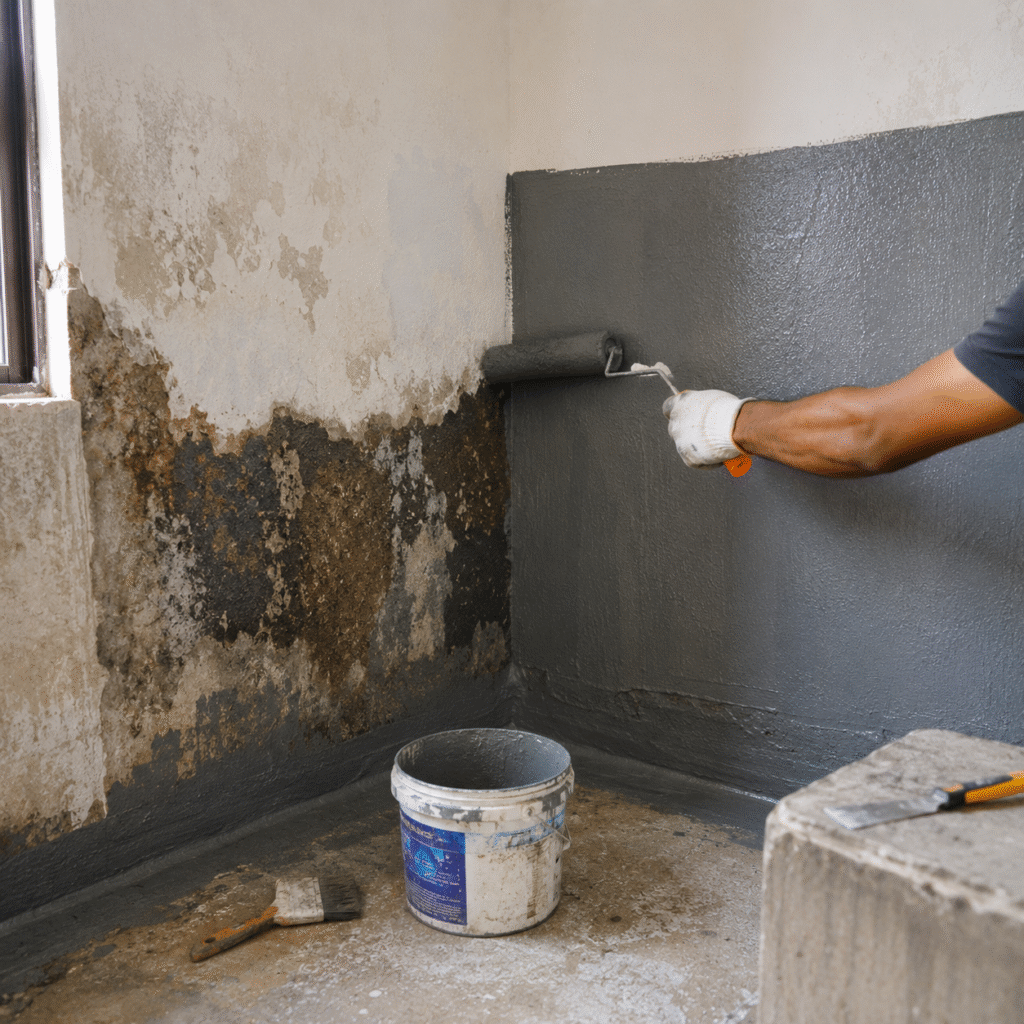
Poor waterproofing at the construction stage. This is the most common cause, and the hardest to fix later. If you’re building fresh, insist on proper waterproofing treatment for the terrace, external walls, and bathroom floors before any interior work begins
.
Ground floor and basement moisture. Homes on the ground floor, or with a basement below, are more prone to rising dampness through the floor. Ask your contractor about a damp-proof course (DPC) layer at the foundation stage — it’s far cheaper to include upfront than to treat later.
Poor ventilation in wardrobes and cabinets. Sealed, poorly ventilated storage units trap humidity inside, which is often mistaken for a wall problem when it’s actually a furniture design issue. Small ventilation gaps or louvers in wardrobe backs make a real difference.
Leaking pipes behind walls. A slow, invisible leak is one of the sneakiest causes of interior dampness. If a specific patch of wall or ceiling keeps darkening despite good ventilation, get the plumbing checked before repainting.
If dampness has already appeared, treating the surface (repainting, re-plastering) without fixing the underlying cause almost always means the problem returns within a year or two.
How to Prevent Deemak (Termites) in Your Interior Woodwork
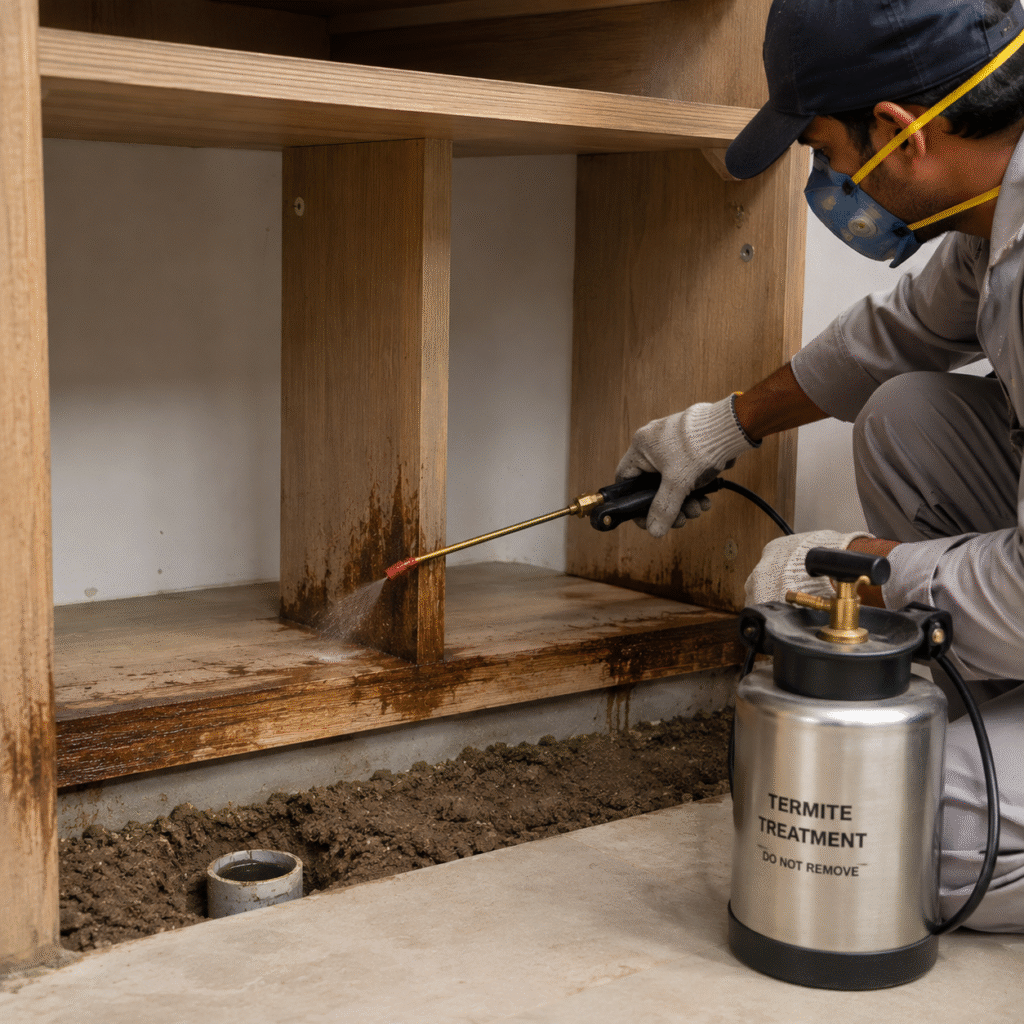
Termites are a genuine risk across most of India, and Jaipur’s climate is no exception. The good news is that termite damage is highly preventable with the right choices made early.
Choose chemically treated plywood, not just “hardwood.” Many homeowners assume solid wood is automatically termite-proof — it isn’t. BWR and BWP grade plywood are chemically treated during manufacturing specifically to resist termites and borers, which untreated solid wood often is not.
Ask about pre-construction anti-termite soil treatment. If you’re building new, this chemical treatment is applied to the soil before the foundation is laid, and it’s one of the most effective long-term protections available. It’s far easier to do this before construction than after.
Avoid direct wood-to-ground contact. Wooden door frames, low furniture legs, and skirting that touch the floor directly are common termite entry points. A small gap or a non-wood base plate reduces this risk significantly.
Get an annual termite inspection, especially in older homes. Early-stage termite activity is often invisible until real damage has occurred. A yearly check, especially before monsoon season, catches problems while they’re still cheap to fix.
Planning Interior Design on a Realistic Budget
A genuinely useful interior design materials guide should help you spend intelligently, not just spend less — budget-conscious design is about smart choices, not lower quality everywhere. A common myth is that budget interior design means low-quality interior design.
Spend more where it matters, save where it doesn’t. Kitchens and bathrooms genuinely need higher-grade materials because of moisture exposure. Bedroom wardrobes and low-use storage units are a smarter place to economize.
Consider modular over fully carpentered furniture. Modular units are manufactured with more precision and often work out more cost-effective than fully custom carpentry, especially for kitchens and wardrobes, while still looking clean and modern.
Phase the work if the full budget isn’t available at once. It’s completely reasonable to prioritize kitchen and bathroom work first, and handle bedroom or living room furnishing in a second phase once funds allow. A good designer should be able to plan for this from day one, rather than treating the home as an all-or-nothing project.
Get a proper 3D visualization before finalizing anything. This might sound like an extra cost, but it usually saves money. Seeing the actual space in 3D before cutting a single sheet of plywood catches design mistakes on screen instead of on-site, where they’re expensive to fix.
That last point is worth expanding on, because it’s genuinely where a lot of budget interior projects go wrong.
Why 3D Visualization Matters More Than Most Homeowners Realize
Traditional interior design relied heavily on manual sketches and the carpenter’s on-the-spot judgment. That approach still exists, but it carries real risk — a proportion error on paper often isn’t caught until furniture is already being cut.
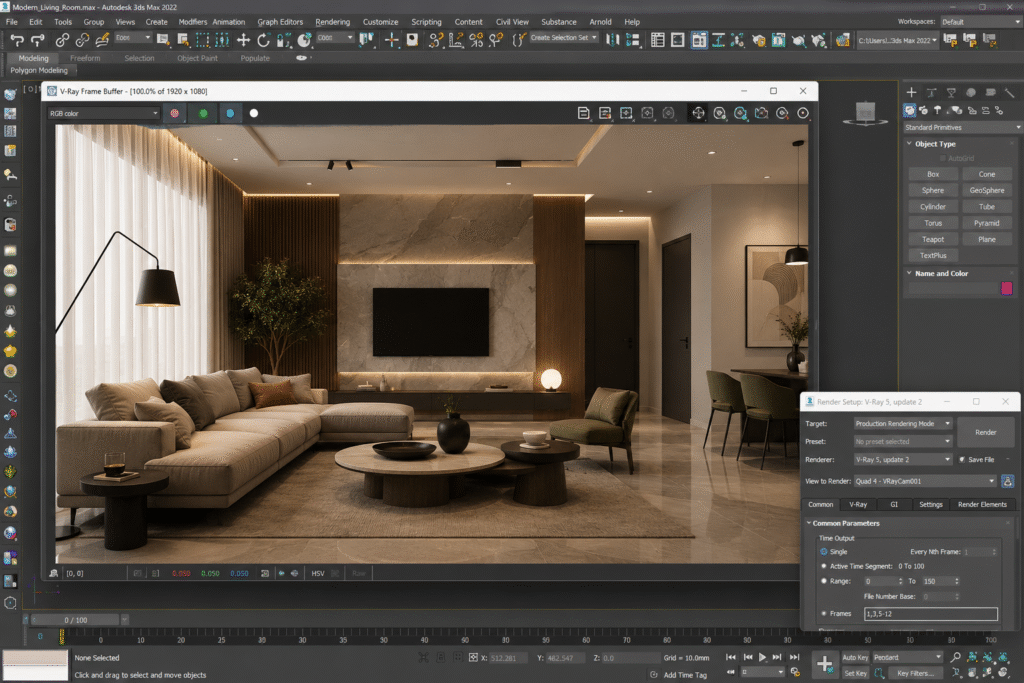
Software-driven design changes this. Tools like AutoCAD for precise layout planning, 3ds Max and SketchUp for 3D modelling, and V-Ray for photorealistic rendering let a designer show a client exactly how a room will look and function before any material is purchased.
This isn’t just about aesthetics. It directly reduces the material wastage and rework costs that inflate so many interior budgets — which connects back to the plywood and dampness sections above. Getting the design right on screen first is one of the most effective budget-protection tools available.
A Note on How Interior Design Is Actually Taught at LIPS
This is worth mentioning directly, since it shapes how this interior design materials guide connects to real training at the institute level.
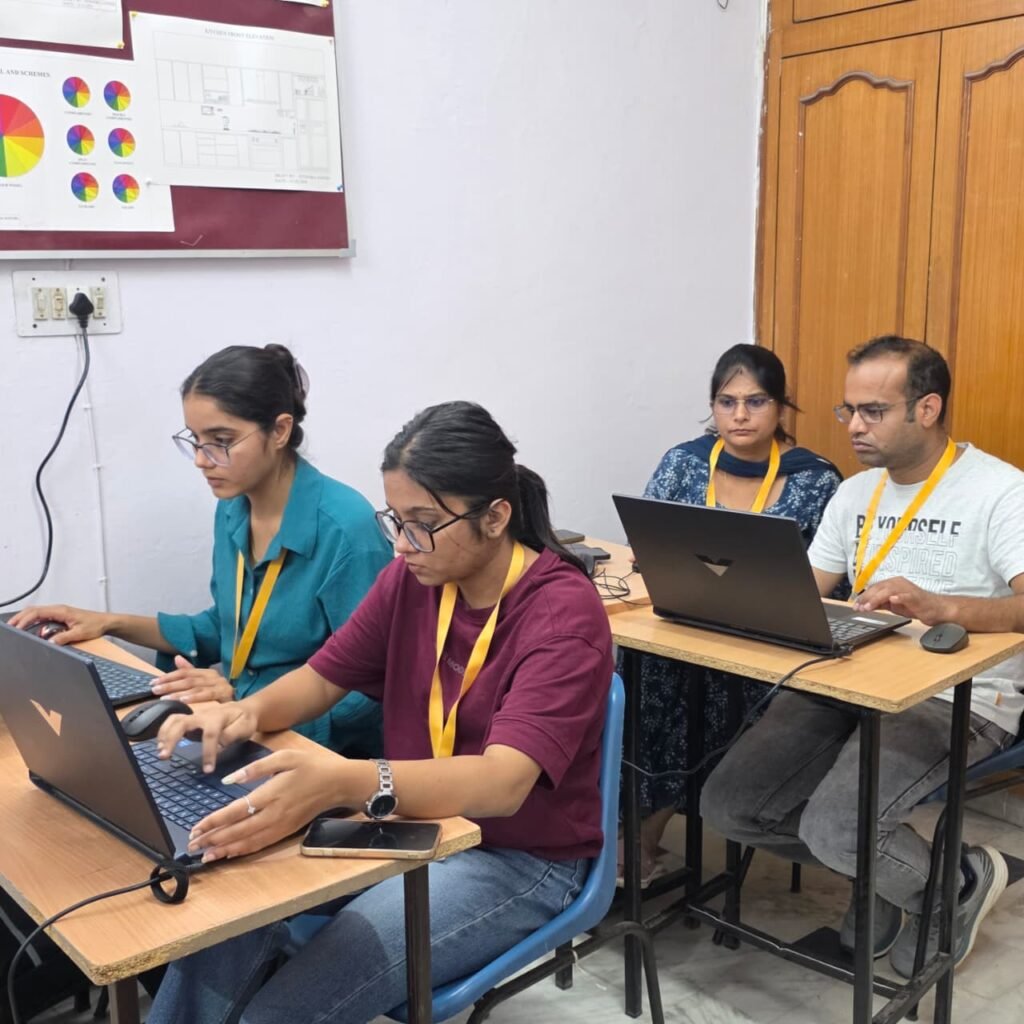
Students complete training in AutoCAD, 2D and 3D visualization, 3ds Max, SketchUp, and V-Ray rendering within the one-year course — the same tools referenced in the section above. The idea is straightforward: a designer who can visualize and problem-solve on screen catches costly material and layout mistakes before they happen on-site.
The interior design program is taught under the mentorship of Prince Sir, a postgraduate in Interior Design from Mewar University with over 8 years of teaching experience, working under the overall guidance of GB Sir, LIPS’s NIFT-trained founding mentor.
LIPS states that its interior design graduates receive placement support as part of the program. If placement outcomes are a priority for you, it’s worth asking directly what that support looks like in practice — the kind of specific, practical question this guide has tried to model throughout.
Interior design student working on 3D visualization software at LIPS Jaipur
Frequently Asked Questions
BWR (Boiling Water Resistant) or BWP (Boiling Waterproof) grade plywood, both governed by Indian Standards IS 303 and IS 710 respectively, are chemically treated during manufacturing to resist termites and borers. Always check for the IS certification mark on the invoice rather than relying on a verbal claim.
Repainting only treats the surface. If the dampness is caused by a deeper issue — construction-stage waterproofing gaps, rising ground moisture, or a hidden pipe leak — it will return unless that root cause is fixed first. A proper diagnosis before repainting saves money in the long run.
Not necessarily. Budget-conscious design usually means spending more on high-moisture, high-use areas like kitchens and bathrooms, and economizing on lower-risk areas like bedroom storage — not cutting quality across the board. Planning with 3D visualization before execution also helps avoid costly on-site mistakes regardless of budget size.
MR (Moisture Resistant) is the entry-level grade for dry areas. BWR (Boiling Water Resistant) handles regular humidity and occasional moisture, suitable for most kitchen furniture. BWP (Boiling Waterproof), also called marine grade, is built for constant water exposure, such as bathroom units. All three are covered under Indian Standards, with BWP falling under IS 710.
This is exactly the kind of detail a good interior design materials guide should spell out clearly, rather than leaving you to guess.
Yes. According to LIPS, its one-year interior design program includes training in AutoCAD, 2D and 3D visualization, 3ds Max, SketchUp, and V-Ray rendering, taught under mentor Prince Sir. The program emphasizes practical, software-based design work over manual drafting alone.
Understanding design principles and being able to execute them professionally — through accurate technical drawings, 3D visualization, and client-ready presentations — are different skill sets. A structured course typically builds the second skill set on top of the first, which matters for anyone pursuing interior design as a career rather than a hobby.
External Reference Links
- Bureau of Indian Standards (BIS) — Compendium of Indian Standards on Plywood, covering IS 303 (general purpose plywood), IS 710 (marine/BWP plywood), and related specifications:
https://services.bis.gov.in/tmp/compendium_2025-06-02-04-13-12.pdf
Call to Action
Thinking about a career where you turn spaces like these into finished, functional homes?
Leela Institute of Professional Studies (LIPS) offers a one-year interior design program covering AutoCAD, 3D visualization, 3ds Max, SketchUp, and V-Ray — taught under mentor Prince Sir, with the same practical, problem-solving approach covered in this guide.
Visit us: 104/4, Near Meera Marg, Opp. Bank of Baroda, Mansarovar, Jaipur 📞 Call or WhatsApp: +91 98283 96131 | +91 97826 62229 🌐 Explore courses: www.lipsglobal.com ✉ Email: info@lipsglobal.com
👉 Book a Free Demo Class → /contact/ 👉 See Our Interior Design Courses → /interior-design-courses/
Have a specific material or budget question this interior design materials guide didn’t fully answer? Call the number above — a direct conversation will get you a clearer answer than any guide can.
Join LIPS Today!
Step into the captivating realm of design at LIPS, one of the Best Fashion Design Colleges in Jaipur. Foster your journey into the dynamic world of design, innovation, and self-expression. Join us, where passion meets profession, and let your creativity unfold in the most exciting way possible. Welcome to a future shaped by your unique vision, and our commitment to excellence remains unwavering.

GB Sir (NIFTian)
Mentor - LIPS
About leela institute of professional studies
One of the Best Fashion Design Colleges in Jaipur Since 2013
Leela Institute of Professional Studies Jaipur alias LIPS Jaipur is one of the Best Fashion Design Colleges in Jaipur providing Regular and Online Fashion Courses, Interior Design Courses, Graphic Design Courses, Jewelry Design Courses, Website Design Courses, & Digital Marketing Courses.
Academic
Successfully Complete Your Design Education At LIPS
Begin a transformative journey as you successfully complete your design education at LIPS Jaipur, recognized as one of the best fashion design colleges in Jaipur. Immerse yourself in a dynamic learning experience, where creativity meets skill development.
Trusted institute since 2013
What Gives Us An Edge
Top-notch infrastructure and facilities, guided by a NIFT-trained mentor, invite you to be part of LIPS—the best fashion design college for building a fascinating and successful career.





Subscribe Our Newsletter
Stay updated. Subscribe to our newsletter for the latest trends, events, and exclusive insights delivered to your inbox
About Us
Discover excellence at Leela Institute of Professional Studies, Jaipur – the premier Fashion & Design Institute since 2013. Offering on-campus and online courses in Fashion, Interior, Graphic, Jewelry Design, Website Design, and Digital Marketing.
Quick Links
Work Hours
- Mon - Fri
- Sat - Sun
- 10 AM - 4 PM
- Closed